Travel Insurance For Groups: Medical Coverage For Group Travel

Traveling with a group can be exciting, but it also requires careful planning. Travel insurance for groups can be a lifesaver during emergencies.
Whether you are traveling with family, friends, students, colleagues, a religious group, a sports team, or a tour group, medical emergencies can happen unexpectedly during the trip.
This is where travel insurance for groups can help. More specifically, many travelers need group travel medical insurance, which is designed to provide medical coverage when traveling outside their home country.
Unlike trip insurance, travel medical insurance usually does not cover trip cancellation, trip interruption, or reimbursement for prepaid travel expenses such as flights, hotels, cruises, or tours. Its main purpose is to help protect travelers from eligible medical costs, emergency treatment, hospitalization, and medical evacuation during international travel.
In this guide, we explain what group travel medical insurance is, what it may cover, who should consider it, how it works, and what to check before choosing a plan.
What Is Travel Insurance for Groups?
Travel insurance for groups usually refers to insurance coverage arranged for multiple people traveling together. However, the type of coverage can vary.
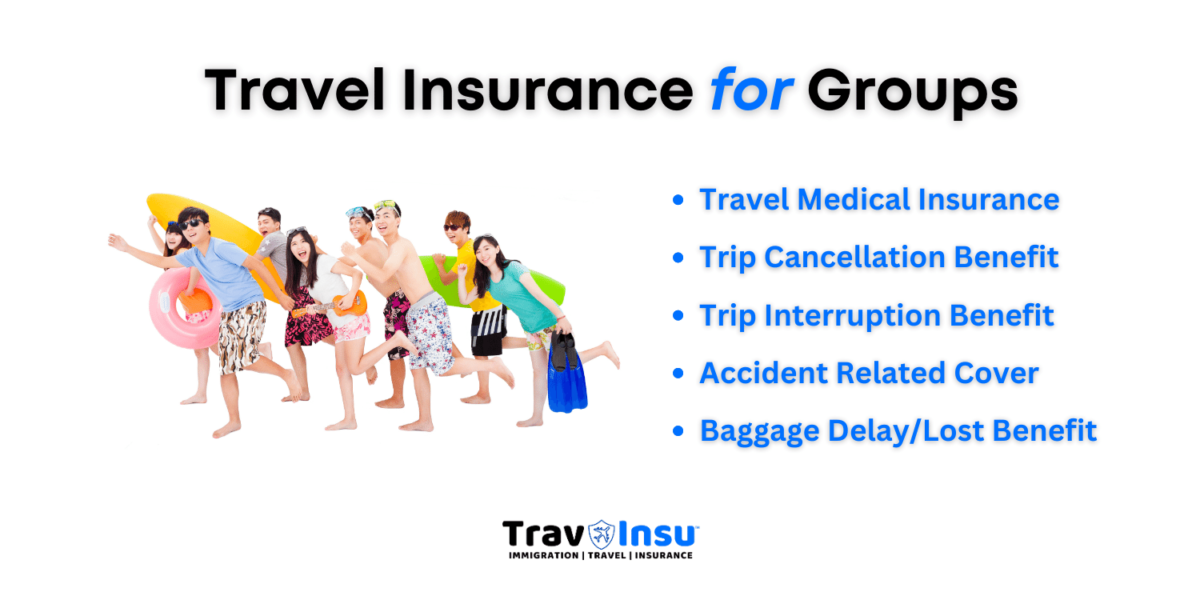
Some policies focus on trip-related benefits such as cancellation or baggage loss. Others focus mainly on medical benefits. For international travelers, especially those visiting countries with high healthcare costs, travel medical insurance for groups is often the more important need.
Group travel medical insurance is designed to cover eligible medical expenses if a traveler becomes sick or injured while traveling outside their home country. It may also include emergency medical evacuation, repatriation of remains, urgent care, hospitalization, doctor visits, and other medical benefits listed in the policy.
Depending on the insurance company, a group may need to include a minimum number of travelers to qualify for group coverage. Some plans may start at 5 travelers, while others may require 10 or more travelers.
Who Should Consider Group Travel Medical Insurance?
Group travel medical insurance can be useful for many types of international travelers, including:
- Families traveling abroad together
- Friends going on an international holiday
- Parents or relatives visiting family overseas
- Students traveling for education, exchange programs, or group tours
- Corporate teams attending meetings, conferences, or retreats
- Religious or pilgrimage groups
- Sports teams traveling for tournaments
- Senior citizen groups
- Tour groups traveling through an organizer or travel company
It is especially useful when the group is traveling to a country where healthcare is expensive, such as the United States, Canada, or parts of Europe.
Why Is Travel Medical Insurance Important for Groups?
When several people travel together, one medical emergency can affect the entire group. A traveler may need urgent care, hospital admission, diagnostic tests, prescription medicines, or emergency transportation.
Without travel medical insurance, these costs may need to be paid out of pocket. In countries like the USA, even a short hospital visit can be expensive for international visitors.
Group travel medical insurance can help reduce this financial risk by covering eligible medical expenses in accordance with the policy terms.
What Does Group Travel Medical Insurance Cover?
Coverage depends on the insurance company and the plan selected. However, many group travel medical insurance plans may include benefits such as:
Emergency Medical Treatment
This may cover eligible medical expenses if a traveler becomes sick or injured during the trip. Covered expenses may include doctor visits, emergency room treatment, urgent care, diagnostic tests, hospitalization, and prescribed medicines.
Hospitalization
If a traveler needs to be admitted to a hospital, the plan may cover eligible hospital expenses up to the policy limit. This can be one of the most important benefits for international travel.
Emergency Medical Evacuation
Emergency medical evacuation coverage may help pay for transportation to the nearest appropriate medical facility if local care is inadequate. In serious cases, it may also help arrange transportation back to the traveler’s home country, depending on the policy.
Repatriation of Remains
In the unfortunate event of death during travel, repatriation of remains coverage may help with the cost of transporting the traveler’s remains back to their home country.
Acute Onset of Pre-Existing Conditions
Some travel medical insurance plans may offer limited coverage for the acute onset of pre-existing conditions. This means a sudden and unexpected recurrence of a pre-existing medical condition may be covered, subject to policy limits, age restrictions, and exclusions.
This benefit is especially important for older travelers, parents visiting the USA, or senior citizen groups. However, not all plans include it, and the definition can vary widely.
Prescription Medicines
Some plans may cover prescription medicines for an eligible illness or injury during the trip.
Urgent Care and Walk-In Clinics
For non-life-threatening medical situations, travelers may visit urgent care centers or walk-in clinics. This can be helpful for issues such as fever, minor injuries, infections, stomach problems, or allergic reactions.
Emergency Dental Treatment
Some plans may include limited emergency dental coverage, usually for sudden pain or accidental injury. This benefit is generally limited and should be checked carefully.
Accidental Death and Dismemberment
Some travel medical insurance plans may include accidental death and dismemberment benefits. This applies only in specific accident-related situations and is subject to policy terms.
What Is Usually Not Covered?
Travel medical insurance for groups is not the same as trip insurance. It usually does not cover:
- Trip cancellation
- Trip interruption
- Cancel For Any Reason
- Reimbursement for canceled flights
- Refunds for hotels, cruises, tours, or event tickets
- Missed connections due to non-medical reasons
- Change of plans because someone no longer wants to travel
- Routine check-ups
- Preventive care
- Regular treatment for known pre-existing conditions
- Maternity care, unless specifically covered
- Elective treatment
- Medical tourism
- Injuries from excluded adventure sports or high-risk activities
- Claims related to alcohol or drug misuse
- Travel against medical advice
Every plan has exclusions; travel insurance does not cover every risk. The group organizer should review the policy document before making a purchase and share any important limitations with all travelers.
Group Travel Medical Insurance vs Trip Insurance
It is important to understand the difference between travel medical insurance and trip insurance.
Travel Medical Insurance
Travel medical insurance primarily covers medical risks during international travel. It may cover eligible medical treatment, hospitalization, emergency evacuation, urgent care, and repatriation of remains.
It is useful for travelers primarily concerned about healthcare costs abroad.
Trip Insurance
Trip insurance is broader and may include benefits such as trip cancellation, trip interruption, baggage delay, travel delay, and reimbursement for prepaid non-refundable trip costs.
This type of coverage is more relevant when travelers want to protect the money spent on flights, hotels, cruises, or tours.
TravInsu’s group travel insurance content should clearly explain this distinction so users understand what type of policy they need.
Group Travel Medical Insurance vs Individual Travel Medical Insurance
Groups may have two options: either buy a group travel medical insurance plan or buy separate individual plans for each traveler.
Group Travel Medical Insurance
Group coverage can be easier to manage when several people are traveling together. It may allow the organizer to coordinate documents, policy details, emergency contact numbers, and coverage dates in one place.
It may be suitable for:
- Tour groups
- Student groups
- Corporate teams
- Families traveling together
- Religious or community groups
- Sports teams
The main benefit is convenience.
Individual Travel Medical Insurance
Individual plans may be better when travelers have different ages, travel dates, destinations, health needs, or coverage preferences.
For example, older parents may need a plan with better coverage for the acute onset of pre-existing conditions, while younger travelers may only need basic emergency medical coverage.
The main benefit is flexibility.

Is Group Travel Medical Insurance Cheaper?
Group travel medical insurance may sometimes be more cost-effective than buying individual policies, but this is not guaranteed.
The cost depends on:
- Number of travelers
- Age of each traveler
- Destination country
- Length of travel
- Medical coverage limit
- Deductible
- Policy maximum
- Type of plan
- Optional benefits
- Pre-existing condition coverage rules
A group policy may be convenient, but individual plans may sometimes provide better coverage for specific travelers, especially senior citizens or travelers with medical concerns.
Before buying, compare both group and individual options.
How to Choose Travel Medical Insurance for Groups
When comparing travel medical insurance for groups, check the following carefully.
Medical Coverage Limit
Choose a coverage limit that matches the destination. For travel to the USA, higher medical coverage is usually recommended because healthcare costs can be high.
Deductible
The deductible is the amount the traveler must pay before the insurance starts covering eligible expenses. A higher deductible may reduce the premium but can increase out-of-pocket costs during a claim.
Policy Maximum
The policy maximum is the maximum amount the insurer may pay for covered expenses. For group travel, check whether this applies per person or for the whole group.
Provider Network
Some travel medical insurance plans have a preferred provider network. This is especially important in the USA, where using in-network providers may reduce costs.
Acute Onset of Pre-Existing Conditions
If the group includes parents, senior citizens, or travelers with known medical conditions, check whether the plan includes coverage for the acute onset of a pre-existing condition.
Emergency Evacuation
Emergency evacuation can be very expensive. Make sure the plan includes adequate evacuation coverage, especially for remote destinations, cruises, or adventure travel.
Age Limits
Some plans may have age limits or reduced benefits for older travelers. Review these carefully before including senior travelers in the group.
Destination Coverage
Confirm that the plan covers all countries the group will visit, including transit locations if relevant.
Activity Exclusions
If the group plans to do trekking, skiing, scuba diving, sports, or other adventure activities, check whether those activities are covered or excluded.
Claims Process
Choose a plan with a clear claims process, 24/7 assistance, and easy access to policy documents. The group organizer should share emergency assistance details with every traveler before departure.
When Should You Buy Travel Medical Insurance for a Group?
It is best to buy travel medical insurance before the group begins its journey. Coverage is usually not available to purchase after a medical emergency occurs.
Buying early also gives the organizer time to:
- Collect traveller information
- Compare coverage options
- Review age limits
- Check pre-existing condition terms
- Confirm travel dates
- Share policy details with the group
- Keep emergency contact numbers ready
For international group travel, do not wait until the day of departure unless the insurer allows it and all traveler details are ready.
Common Mistakes to Avoid
When buying group travel medical insurance, avoid these mistakes:
- Assuming it includes trip cancellation
- Choosing the cheapest plan without checking medical benefits
- Ignoring emergency evacuation coverage
- Not checking age restrictions
- Not reviewing pre-existing condition rules
- Assuming routine care is covered
- Forgetting to check exclusions for sports or adventure activities
- Not confirming whether coverage is per person
- Not sharing policy details with every traveler
- Waiting until after the trip starts to buy coverage
Frequently Asked Questions About Travel Insurance for Groups
What is travel insurance for groups?
Travel insurance for groups is insurance arranged for multiple travelers. For international travel, many groups look for travel medical insurance that covers eligible medical expenses, hospitalization, emergency treatment, and medical evacuation during the trip.
Does group travel medical insurance cover trip cancellation?
Usually, no. Travel medical insurance generally does not cover trip cancellation or reimbursement for prepaid travel expenses. For cancellation benefits, travelers may need a trip insurance policy.
What does group travel medical insurance cover?
It may cover eligible medical expenses, emergency treatment, hospitalization, urgent care, prescription medicines, emergency medical evacuation, repatriation of remains, and limited coverage for the acute onset of pre-existing conditions, depending on the plan.
Is group travel medical insurance useful for parents visiting the USA?
Yes. It can be useful for parents or relatives visiting the USA because healthcare costs in the United States can be high. Families should compare plans carefully, especially regarding age limits and coverage for the acute onset of pre-existing conditions.
Can senior citizens be included in group travel medical insurance?
Some plans allow senior citizens, but benefits, limits, and pricing may vary by age. Always check age eligibility before buying.
Is group travel medical insurance cheaper than individual plans?
It can be, but not always. Group coverage may be easier to manage, while individual plans may offer better customization for older travelers or people with specific medical needs.
How many people are needed for group travel medical insurance?
The minimum group size depends on the insurance company. Some plans may start at 5 travelers, while others may require 10 or more.
Does group travel medical insurance cover pre-existing conditions?
Many plans do not cover routine treatment for pre-existing conditions. Some may cover the acute onset of pre-existing conditions, subject to policy terms, age limits, and benefit limits.
When should groups buy travel medical insurance?
Groups should buy travel medical insurance before the trip begins. It is better to purchase early so the organizer has enough time to compare plans, confirm traveler details, and share policy documents.
What should a group organizer check before making a purchase?
The organizer should check medical coverage limits, deductible, policy maximum, emergency evacuation, age restrictions, pre-existing condition rules, exclusions, provider network, and claims process.
Conclusion
Travel insurance for groups can be valuable, but travelers should understand what type of coverage they are buying. If the goal is to protect against medical emergencies abroad, the group should look for group travel medical insurance rather than a trip insurance policy.
Group travel medical insurance may help cover eligible medical treatment, hospitalization, emergency medical evacuation, urgent care, repatriation of remains, and other medical benefits during international travel. It can be especially useful for families, parents visiting the USA, student groups, corporate teams, religious groups, sports teams, and senior travelers.
Before choosing a plan, compare coverage limits, deductibles, age rules, pre-existing condition terms, evacuation benefits, exclusions, and claims support. The right plan should not only be affordable but also provide meaningful medical protection for every traveler in the group.